Make the Change to Eco-Friendly Yarn

Yarn crafts such as knitting and crochet, are great hobbies to have since you can create so many things that you won’t have to purchase pre-made, and you can really customise your items to suit the recipient or your current yarn stash. As we are all now aware of the environmental issues that humans are causing to the planet, a lot of us are now trying to become more environmentally friendly by purchasing recyclable materials, repairing and reusing existing items or even moving to electric cars.
You can help even further by using eco-friendly fibres in your crafting projects. All of these products will help you move away from man-made acrylic that do not decompose to naturally grown yarn. A majority of these yarns are also vegan – I have therefore separated wool from the rest of the yarn types here.
A lot of people start to practice with acrylic yarn – it is generally cheap and can be bought at so many different stores – I’ve even got some from the pound shop. This post is certainly not here to shame anyone for using it, and I think most fibre artists will have some acrylic in their stash somewhere. The purpose here is to show the downsides to acrylic yarn and, more importantly, highlight some of the alternatives out there. You could even reuse your acrylic yarn to help extend its useful life before it is thrown away – I will chat more about this near the end of the post. .
You probably wouldn’t guess from feeling some of those soft baby yarns that acrylic is actually a type of plastic. And of course, we have all heard recently about how bad plastic can be from the environment – from clogging up landfill sites to distributing tonnes of microplastics into our oceans. It even takes up to 200 years to fully decompose. Darn Good Yarn has written a really good article that discusses these issues in a lot more detail than I will here. But what I do want to share before we get into the eco-friendly alternatives is an image a captured while looking at acrylic yarn under a microscope (This is a screenshot from my TikTok video – the original image is somewhere amongst everything else saved in my phone).
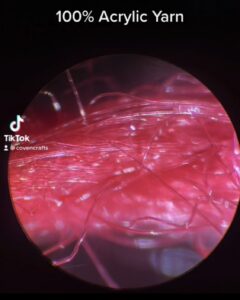
When you see it close up, you can see how plasticky it looks. It doesn’t seem so snuggly now!
Anyway, enough of the naughty acrylic and on with discussing some of the eco-friendly materials. Some you may already be familiar with, but others may be a new one to try. At the end of each section you will see a selection of links to certain brands – these are some great examples of the material discussed, and most of these are easily accessible so why not give some of these a go.

These yarns take old items and fibers and repurpose them into a usable ball of yarn. This is a good way of getting more use from non eco-friendly materials to help reduce the need for more of the material to be made, and to prevent it from going to landfill after only a short lifespan.
Brands: Paintbox, Hoooked, Stylecraft, Rico,
Many cotton yarns are dangerous for the environment. However, organic cotton yarn is a good option if it’s also processed without a lot of chemicals. You likely will not find pure white organic cotton yarn, but look for other colours. Cotton is from plants, so no animals are harmed in the making of cotton. It also has some really good properties when it comes to water – face & dish cloths and coasters are perfect ways to utilise your cotton stash
Brands: Deramores, Stylecraft, Schachenmayr
Nope, not from worms. We now have silk-like yarns from bananas, seaweed, corn, and soy. But, it’s also good to use recycled silk fabric even made from worms to recreate yarn to reuse for various projects. Regardless of which type of silk yarn you use, it is fully biodegradable.
Brands: Unfettered Pro

If you want something that feels fabulous next to the skin, try using organic linen yarn, or even recycled linen to create amazing sweaters. Linen is firm enough to knit with precision, but once your item is washed it’ll become soft and drape beautifully.
Hemp is truly a wonder textile given to us by nature to use in all aspects of our lives, including knitting. Use it to create baskets, sturdy plant hangers, belts, and even sandals.
Brands: Berroco, HeavenHemp
Bamboo is an easily renewable resource that doesn’t mess up the soil or environment when growing. In addition to this, it is known to be one of the fastest growing plants on earth – the Guinness Book of World Records has logged one species as growing 35 inches a day! Smart people have figured out how to turn bamboo into a textile that supports knitting. It breathes, drapes well and it has good luster. It’s strong, yet flexible, and can even be softer than silk. However, everything made with it will need to be hand washed, so it’s not ideal for frequently washed items.
Brands: Stylecraft, Sirdar, King Cole
Bamboo facts from: https://bambubatu.com/how-fast-does-bamboo-grow/

While not vegan, organic wool is sustainable. It’s also the most easily washable and durable yarn you can buy that works for all sorts of projects. The animal is not harmed to make the yarn – in most cases it is sheared to make the animal more comfortable.
If you ever have the opportunity to go alpaca walking, do check out if they have a shop – a lot of times they will – and see if you can grab some yarn that has come from their very own alpacas!
Merino: Debbie Bliss, Rowan, Cascade
Alpaca: Rowan, Cloudborn, Cascade
As you have probably gathered from this post, yarn can be made from pretty much any kind of substance. For example, have a look at the following yarns that are made from Soy, Eucalyptus and Raffia.

The main rule of thumb is to avoid synthetic yarns, because the way they make them is bad for the environment and disposing of them can be equally as bad. Instead, choose natural fibres. In addition, you can reuse old sweaters and blankets to avoid adding more waste to the environment. I remember my grandmother taking old jumpers that no longer fitted, pulling the yarn out and making an entirely new item of clothing. This can help extend the lifespan of the material and give it even more love. For example, image that you had made a little cardigan for your best mates new baby. Of course babies grow fast so it soon no longer fits. Why not take it apart a make a teddy for the little one?!
I hope this inspires you to try a wider variety of yarn materials as there are so many options to choose from nowadays. Perhaps you are looking for more eco-friendly ideas? Check out our previous post: Going Green at Hallowe’en!
Found an eco-friendly yarn that you have completely fallen in love with? Why not share your discovery in the comments section.